Tuesday, 1 September 2015

Curtain Call

Or "The Distinguished Thing" by Anthony Quinn is one of the most pleasantly surprising books I've read. A well known West End actress witnesses the attempted murder of a prostitute in a hotel. The only problem is, she was there having an affair with a married man, so she can't come forward as a witness. And while she doesn't, more women die. This, like the triumph that is "Station Eleven" by Emily St John Mandel has no main character, however, and focuses on the lives of the characters caught up in these events.

It's brimming with atmosphere, and the 1936 setting becomes a major part as it is used to show how humanity is heading towards a dark time, one from which it has arguably not emerged in a particularly moral-centric way. These very well developed characters simultaneously display the decay of their own lives as well as society for a tense and gripping read that is totally absorbing.

The identity of the killer, while the premise may suggest otherwise, is not actually the main storyline here, however when it is revealed to the characters (you'll probably have guessed a long time before), the dramatic impact is incredible. What makes this novel work so well is its unpredictability, and I'll bet you certainly won't expect THAT event towards the end to happen.

There's no wonder the critics love this book, it's extremely satisfying and thought provoking and entirely unconventional, and it's certainly one of those books where, when you finish reading it, you will mourn the characters, as after the length of the novel they will seem entirely real. I'm pretty sure this book is part of the 3 for 2 deal at Waterstones at the moment, so you have no excuse not to read it.

10/10

Sunday, 30 August 2015

The Rest Of Us Just Live Here

Have you ever watched an action scene in a film where all the extras are running away in terror, and a lot of them get hurt, and for a minute you wonder whether or not they're going to be OK, but you never find out? This book is about those people. The basic idea here is that there's this big, clichéd YA novel going on (which the chapter headings are the chapter heading for, explaining that story) whereas the bulk of the book focuses on Mikey, just an ordinary guy trying to live an ordinary life while the "indie kids" are trying to stop an invasion.

But the thing is, it's not just about how the lives of the indie kids affect Mikey, not at all. His problems are real. For example, he suffers with OCD (real OCD, not "I'm a bit OCD" OCD) and he's about to leave his home town to go to college. By juxtaposing these real, emotional problems next to the exaggerated problems of the indie kids, Ness highlights how important and enormous anxiety is as well as the general worries of growing up, of being a teenager.

Now, if you know me, you know I've long been a fan of Patrick Ness (I think fan might be a bit of an understatement actually, but I digress) so it's hard for me not to compare it to his other books (which you should all definitely read). So I will say this - this is a very different read to "More Than This", his previous YA novel. Instead of big ideas and philosophy, this book shows the importance of real-life worries and how they are the real issues that YA novels are dealing with when they portray an exploding school or a tyrannical regime. This book is also a lot funnier (with Ness poking fun at YA traditions) and in places more "light" or even light-hearted, but seriousness does have its place here and is, perhaps, what makes this book's point. And while I would say that it's not his best, it comes pretty close indeed. I have never felt more emotionally attached to any characters in any book ever and the narrative sparkles with a wit and realism I've not really ever experienced in a book. I think this book also showed me how Patrick Ness succeeds where John Green fails - his characters are meaningful and likeable and always flawed in realistic ways just like a Green character isn't. They say meaningful things without sounding like 30-something pretentious novelists. That said, there are the occasional few lines where I was wondering "would anyone really say that?" but then I thought, perhaps here, in this situation, someone actually might.

This book looks at, in a world of "Chosen One"s, the boy who feels like he could never be chosen, like he's the least needed. And it's so beautifully, sensitively, cleverly and originally written that it works on every level in every way. At times when the storyline could go into "everything's resolved as if by magic mode" or is heading towards predictability Patrick Ness makes a point of changing the direction. It's a fresh, exciting, daring and brilliant novel that will probably become one of Patrick Ness' most popular books. Talking about it just won't do it justice. You just need to read it.

10/10

Monday, 3 August 2015

Look Who's Back

And yet again, I find myself in a strange position. I have no idea how to review this book. It's a difficult one, but for different reasons.

This book's premise is simple. Hitler wakes up in 2011 Berlin. And by the looks of things, it's going to be a bit of a black comedy. Unfortunately, it fails to really deliver. I think there are a number of reasons for this.

Firstly, this book has been translated from German, meaning lots of the puns are lost in translation. German humour is different to British humour on the whole as well, and satirical references to German culture are often lost on a British reader.

Secondly, Vermes has set himself an impossible task. How do you write a comedy about Hitler without downplaying what Hitler actually did and actually was like? You can't! It would be too disturbing and uncomfortable. Instead we get what I have previously seen described as a Nigel Farage with a moustache. Rather right wing, but ultimately harmless. And this is a dangerous and potentially insulting thing to do. Hitler was an evil man, to portray him as a bit grumpy at worst is perhaps a bit of an issue. There were, however, some moments that were supposed to be serious and not funny that worked really well as Vermes explored real repercussions of Hitler's actions. Sadly, moments like this were few and far between.

Thirdly, I was left with a sense of confusion about what the whole point was. Things happen in the novel, of course. But its plot is more of a device in order to show off Hitler. Yes, it's about his rise to power again, but there is no antagonist (well, you know what I mean) or "problem", just Hitler being Hitler all the way through. Vermes' satire depends on Hitler's ridiculous observations about the world, yet once in a while he will make a very true and pertinent point. The novel ends (spoilers) without explaining a) How Hitler ended up in 2011 or b) why Hitler was wrong. In fact, the novel ends with Hitler essentially getting what he wanted. And when you combine this with his increasingly accurate observations about the world, it's hard not to wonder whether Vermes might be trying to say that Hitler wasn't "all bad", something which I found quite an alarming message for a book.

And finally, the middle was really boring. There were a lot of confusing rants that sometimes didn't make a lot of sense and lots of flashbacks to the past. What little plot there was didn't continue for a while.

There were some redeeming factors, as there were a few jokes that genuinely were funny and some interesting characters and themes as well as the odd thought provoking moment as mentioned above. But overall, I'm sad to say, this potentially very good idea isn't really worth reading.

4.5/10

Saturday, 25 July 2015

The Bone Clocks

This is going to be a very difficult one to review, because there was so much wrong with it, yet I still really enjoyed it. And it's basically six books in one. Sort of.

Basically, this novel is six "novellas" following the life of Holly Sykes (I mean, it wouldn't be a David Mitchell book if it didn't have six separate stories in it would it?) each of a different genre with a different setting and narrator. Now, in "Cloud Atlas", this worked really well, as the whole point of that novel was the connections between each story. In "The Bone Clocks", an overarching story is more present. This can mean that the narrative becomes very frustrating, as Mitchell chooses to have each "Novella" focus mainly on its narrator, meaning the Holly story is left alone for a good chunk of the book (which is over 600 pages long, so not a light read). This means, just as we are interested in an event, we are zoomed forward in time a decade to the next novella, to a different place and the narrative will eventually reveal what happened in the mean time. This can be effective, as sometimes there's an emotional punch we didn't expect, told as if it's been and gone and so doesn't matter, yet to the reader, it's a big shock. It's done well, but it's annoying. Also, there are no chapters, just big chunks of text, which I found a bit overwhelming to begin with. I think, to make it easier for all of us, I will review each story separately. One problem that I'll ignore is Mitchell's enormous stereotyping. So, when he write about the 1980s, he tries to fit as many '80s stereotypes in a possible, or when he writes about the early 2000s, of course, he has to include the Afghanistan war. It's almost as if, to the characters in the book, the only things that happen in a decade are the famous aspects.

1. A Hot Spell (1984)
This is a really nice introduction, narrated by a 15 year old Holly. It's sort of a typical rebellious teenager story with some great characterisation from the start. Holly's an instantly likeable and realistic character and Mitchell wastes no time getting her story going. There are occasional moments linking towards the book's fifth story (and arguably its climax) that make no sense at the time of reading, as they are most definitely within the "fantasy" genre, and so feel very out of place, however this novella is very entertaining and fun. 9/10

2. Myrrh is Mine, It's Bitter Perfume (1991)
This is probably the worst novella in the book. We follow the incredibly irritating Hugo Lamb through some very boring Cambridge jargon filled generic "being mean to people". This mundane conversation based novella comes straight after the cliffhanger (see what I did there?) at the end of "A Hot Spell" and so is incredibly frustrating, especially as Holly only enters about half way through. Things become a bit more interesting with her around, but looking back, while Hugo's character does become important, this one felt a bit pointless. 3/10

3. The Wedding Bash (2004)
By contrast, this one was my favourite. Narrated by Ed Brubeck (minor spoiler alert), Holly's now partner (a very well written and flawed yet likeable character), the narrative switches between a family wedding and Brubeck's reporting in Afghanistan. Suspenseful, intriguing and very realistic, this novella had just the right amount of everything, as well as a conclusion linked to the overall "Bone Clocks" story that had just enough mad fantasy elements in it to maintain an interest yet not put me off. This one was far easier to read than the previous one, making me feel almost relieved. 10/10

4. Crispin Hershey's Lonely Planet (2015)
Mitchell shows here that while he's inventive, he's certainly not original. Exactly like in "Cloud Atlas", the modern day story is a comedy about an author. I wonder why... This author in particular started off just as irritating as Hugo Lamb, making me dread the rest of the book. The first half was full of unnecessarily detailed jargon (again) but at least it featured Holly. The second half, by contrast, was actually very entertaining and intriguing, with the novella finishing on a very exciting, unexpected and tense note which was very well written indeed. 6/10

5. An Horologist's Labyrinth (2025)
The longest novella is basically where the first four have been heading. It's Jargon Central, with every other word Capitalised because it Means it's a name of Something Important. This gets incredibly irritating, and means that it's very confusing. The whole purpose is this: certain characters are able to live on past death as their own soul in a new body. This is a minefield for confusion, as that means each character has different names and bodies, even simultaneously as it depends who they are talking to. As it moved on, however, things were explained and the narrative became genuinely exciting, and the ending was very good indeed. The problem here is that everything was crammed in, highlighting my opinion that this entire story could have been told very differently, and not as six novellas, meaning there was more time for the central plot (this one) and less ridiculous peripheral jargon about people that don't really interest the reader. Mitchell fell into the format trap, where he decided on his format (his usual) before his content, meaning his brilliant ideas are somewhat wasted. 5/10

6. Sheep's Head (2043)
A very fitting ending, as while the climax of the novel was obviously "An Horologist's Labyrinth", this novella highlights what the real purpose of the novel was. It describes a potentially very real future in which climate change has meant society is collapsing, something very poignantly stated after a story about immortality and baddies who murder the next generation for their own gain (which is, it transpires, a metaphor for the real problem highlighted here). This one is very well written and acts as a reality check. Mitchell is basically saying "It's all very well me writing this fantastical story, but something much more serious is really going on, which is all the more real". I think climate change is a very important issue and really admire Mitchell for this one. 9/10

You can see why it's hard to think of this overall. It's all very disjointed and fascinating yet frustrating and gripping. Lots of things could have been done differently, yet the novel as a whole makes more sense at the end than it does when you are reading it, and I realised I enjoyed it very much, despite its flaws. Furthermore, its message is very important and thought provoking, so it's definitely worth a read. Its title, after all, means a lot more than is first apparent.

7/10

Ed. You know what? After giving this book a lot more thought and time, I'd like to give it a "hindsight" rating of 9/10.

Wednesday, 22 July 2015

Station Eleven

Dystopian novels are all over the place these days, yet this one, for many reasons, is easily the best. Yes, I said it, THE best. Emily St. John Mandel has created an absolute masterpiece out of familiar elements and brand new ones, resulting in a gripping novel not only about an apocalypse but about art, memory and what we value most in our lives.

The novel very cleverly interweaves many different narrative strands from the epicentre of the "Collapse", when a new strain of flu (written in a very believable way) wipes out 99% of humanity. After initially jumping around through time, links begin to be made to form an incredibly satisfying conclusion. One character is a member of "The Symphony", travelling classical musicians and Shakespearean actors who move between post-apocalyptic settlements to perform - an absolutely genius idea and one totally down my street. Throughout, both the flashbacks to before the "collapse", describing the ins and outs of characters' lives, and the narratives after the "collapse" remain gripping and beautifully written. There's so much in there that it would almost be a crime not to put this on English A level courses, as the more you think about it, the more there is to understand. It would also be a crime not to make this into a film, I think. I can imagine it now...

The writing style is deeply gripping, beautiful and clever, with moments that are absolutely breath-taking and speak volumes about how we find meaning in our lives. The characterisation is fantastic, with characters fleshed out without the reader even particularly noticing, with genuine empathy created right from the start. And the pacing is perfect, with the plot thickening at just the right times to make this extremely gripping and entertaining. I would go as far as to say that this book is serious competition to the best Patrick Ness novels, and for those of you that know me, that would seem impossible. I honesty cannot recommend this enough.

11/10 (see what I did there?)

Tuesday, 21 July 2015

The Miniaturist

Next on my holiday reading list was "The Miniaturist", Jessie Burton's debut novel. This was a very unique and intriguing novel, and reading it straight after "Sister Noon" highlighted just how good it was. Like Fowler's novel, this one focuses on a vulnerable female protagonist trying to find her way in the world, and it uses the entirely alien to me yet intriguing setting of 17th Century Amsterdam. Unlike "Sister Noon", this is actually very effective, and plot developments, twists and turns throughout the novel give the it a sense of unpredictability and can deliver genuine shocks and drama.

The premise is this. 18 year old Nella Oortman is recently married to 37 year old Johannes Brandt, but the household seems very strange and mysterious. A wedding gift, a miniature version of the house she is now living in, is furnished by a mysterious miniaturist, who uses their models to slowly reveal secrets about the house and the lives of the people in it. It initially feels like there will be a massive twist at the end, yet this is not the case. Instead, there are shocks and surprises woven throughout the narrative, leaving the ending for real, harsh consequences of what's been revealed. This, unlike some novels, is not neatly tied up by the end, yet the ending feels very fitting indeed, as Nella's development as a character is shown to have been the main focus of the novel.
 
Another pleasant surprise was the subject matter the book deals with. Without giving anything away, I will say that it ventures to surprising topics given its setting and time period. This means that occasionally some dialogue seems out of place or unrealistic, but on the whole this is not the case. Burton's research for the novel was obviously very thorough, with lashings of beautiful historically accurate description and detail. There were times when I was so taken in by the setting and the such high inequality and capitalist drives of the city as well as the oppression by rulers that, had this setting not existed in the past, I could have believed it to have been a dystopian commentary on modern society. Burton doesn't miss a trick here, interweaving multiple threads and secrets and building to one of the best and most unexpected (yet not "twisty") endings I could have hoped for. I look forward to seeing what she writes next.

9/10

Monday, 20 July 2015

Sister Noon

After very much enjoying "We are All Completely Beside Ourselves", I leapt at the chance to pick this up from the Waterstones "Buy one, get one half price" display. The epigram, "Words were invented so that lies could be told" seemed intriguing and potentially very clever, with the setting of 1890s San Francisco as a new one for me, adding to the intrigue. I was hoping for something similar to "Beside Ourselves", however I was utterly disappointed.

This novel is, at its heart, just gossip, that's the main point of it. It's based solely on what some characters think of others and what may or may not be true about them. This could be interesting if there were any secrets, but the gossip just sort of fizzles out with no conclusion. The reader is left utterly clueless. It might be fair to say "the reader has to decide for themselves what is true", but is it really worth it? Is there no shock twist? Nothing revealed at all? No. There is absolutely nothing. What this novel lacks is a plot. The characters, in part, are largely based on real people, especially Mary Ellen Pleasant, the most mysterious character in the novel. Fowler does in fairness describe the setting beautifully and there are moments when I felt some empathy for Lizzie, the protagonist. However, aside from a very small development in Lizzie's life happening towards the end of the novel (one which the title basically gives away anyway, and which isn't worth 250 odd pages of build up) nothing of any significance happens. There are one or two moments of plot, but when you're remembering a page on which a protagonist gets lost briefly in a corridor as one of the most eventful moments in the novel, well, lets just say the novel is hardly riveting.
 
The novel did strike a chord initially, as on page 12 Ms Pleasant comes out as a "Coloured Woman", and it was interesting to see how people perceived race differently, especially in light of Rachel Dolezal's recent statements in the media. This, however, like every other potentially good idea in the book amounts to absolutely nothing. Characters come and go like they have no importance, and with whatever tiny plot there was being side-lined for everything that simply wasn't interesting, "Sister Noon" quickly became a drag. I wouldn't recommend it, unless you want to read something purely for the interest of another setting. Afterwards I used it to squash two moths.
 
3/10

Tuesday, 2 June 2015

The Bees

Let me just give you a bit of context. And by that, I mean context of me sitting here typing exactly what you are now reading - not context of this novel.

I've been sitting here for a full five minutes and I still can't work out what I feel like about this book. I finished it yesterday, and gave myself a night to sleep on it in the hope that an opinion might form itself in that time. Alas, nothing. And yet, this novel HAS made an impact on me. It's just the consequences of said impact that confuse me.

Paull's debut novel follows the life of a sanitation bee, Flora 717. Paull very cleverly creates a world the likes of which haven't been seen in an novel to date. She takes some liberties with actual bee lifestyle to create a world which feels, as it is meant to, alien, confusing and strange. The problem with this, however, is that this setting is so absorbing that the reader isn't really sure which morals are supposed to be "Ok", and therefore when something supposedly corrupt or moving happens (initially) it can be hard to tell whether or not we should feel anything about it. This is perhaps due, in part, to the lack of insight into Flora's thoughts. For a long time, we feel like we have no idea what she is thinking. I've read reviews of this book which describe her merely as a "plot-device", which I feel is quite accurate for about 2/3 of this book. For the first very large proportion, lots of things just happen to Flora in very quick succession. Because of this, the narrative comes across as quite disjointed and bitty, with nothing to hold the reader's attention happening until Flora begins to become a bit more independent and interesting. This, of course, may be purposeful, as we are supposed to believe that Flora is part of the "Hive-mind" and therefore should not be pursuing autonomous thought and behaviour, however this makes the novel very difficult in places.

And this is a shame, because where the novel excels, it really excels. This is a fantastic example of a novel which, for the most part, has a strong female protagonist who at no point is dependant on a male. It also asks some profound questions about faith and society as well as class discrimination. I would have no problems writing countless essays on Marxist and Feminist readings of this novel, which showcases how this novel is of a very high quality. This might explain why this book seems to be getting a lot of attention. Towards the end of the novel, the previous "bitty" plot strands begin to subtly come together to make some kind of sense in relation to the novel as a whole. As well as this, there are certain moments that are so exciting, shocking and moving that you will actually be hooked. And the conclusion of the novel was one of the most unpredictable and beautiful things I've read in a while.

So to summarise, Paull has successfully created a very profound novel set in a very clever world, which perhaps she is too keen to show off through the use of lots of events rather than through development, leading to a disappointingly disjointed novel which is often frustrating and confusing, but always thought provoking.

7/10

Saturday, 23 May 2015

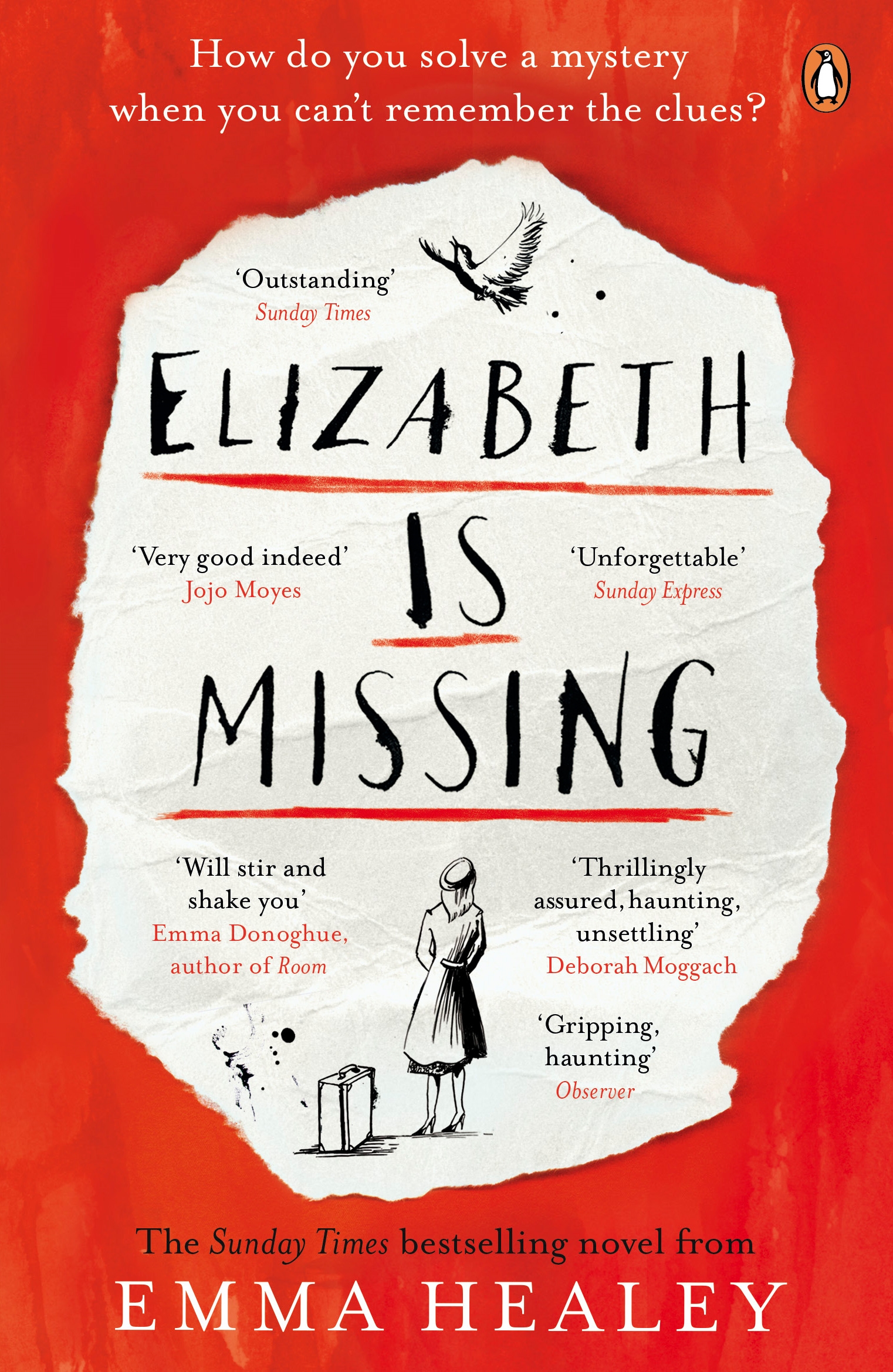
Elizabeth Is Missing

From the cover, blurb and reviews, this novel seemed initially like a murder mystery with a twist - something I found very appealing. From what I gathered, an old lady with deteriorating memory (perhaps dementia) is the only person who can remember that her friend is missing, but she is struggling to remember why and how. Now, there's nothing wrong with this at all. It seems very interesting. The novel itself, however, is very different.

The primary focus is on Maud's life as her condition worsens. It seems the real mystery is one from her past that remains unsolved - something which readers are taken to via flashbacks to post war Britain as events unfold. For Maud, these flashbacks become increasingly confused with reality until she, against all odds, finds the answers.

This is another one of those books where the preface is rather confusing and out of context, making not much sense. However as soon as chapter one begins, so does the narrative journey. After the conclusion, reread the preface and you will notice just how expertly the threads are woven together by the end.

Some people have called this novel frustrating. They've been asking why someone didn't just TELL Maud where  Elizabeth went. But that's the really sad thing - they do, all the time, but Maud can't remember and so the reader doesn't know. The concept here, while extremely sad, is incredibly well carried out. We'll be thrown into and out of moments and conversations to reflect what Maud can and can't remember. We feel her confusion with her and Healey expertly creates the same sense of frustration that Maud is feeling for the reader. What's especially remarkable here is, as Maud deteriorates, an already immersive sense of emotion grows along with the sense of expectation, creating an incredibly powerful and emotional climax.

This is an absolutely fantastic and gripping read in ways in which you might not first expect. This novel deserves to stand among some of the great and well known works of late, more so than its run-of-the-mill cover and misleading blurb give it credit for. That said, there really is no way to properly summarise this novel or indeed its genre or type. It covers all bases to form something that is undoubtedly a book which you, ironically, will never forget.

9.5/10

Next I'll be reading "The Bees" by Laline Paull

Wednesday, 20 May 2015

We Are All Completely Beside Ourselves

This isn't the sort of book I'd normally look at in a bookshop and then choose to buy, but I was told I simply had to read it. And I'm glad about that, because it opened my eyes to a new type of novel and a new writer.

I wish I could talk about the details of the plot here, but something happens around 70 pages in, something key to the plot, that would be spoiled if I were to do so. Instead I will say this - essentially this is a novel about a girl, Rosemary, and her relationship with her family and friends, but especially her sister, Fern.

I would say that this novel and I didn't get off to the best of starts. It takes a while to get into and the narrative isn't chronological. The reasons for this, however, become clear as we realise Fowler has been withholding some vital information from us in order to play with our expectations. As the end of the novel approaches, the themes presented throughout come together really nicely, and the novel's initially confusing beginning suddenly has a lot of symbolic significance. When I'd finished the book, then, I had no complaints about the beginning. There were clear reasons for it and the rest of the novel accounted for and made up for my initial confusion. I suppose that's one downside, though - aside from intrigue, the novel has no overt hook. However, once the concept unfolds 70 pages in, you'll get a chance to see just how original and brilliant the story is.

The characters are extremely well developed, even the minor ones. Fowler uses her narrator extremely effectively so that we really do see through Rosemary's eyes. Her voice gives us a sometimes funny, sometimes tragic but always very (and cleverly) human perception of the world. Fowler's way of writing is one that I think will last - not only to give her story a timeless feel but also so that readers can appreciate the novel in new ways upon each rereading. So much beautiful attention to detail is no mean feat, especially in a novel where detail is highly subjective and withheld.

As I say, I wish I could talk more about it, but you'll have to find out for yourself why this book is becoming so popular. Suffice to say I thoroughly enjoyed it. Thanks again to "Agent Leo" for the lend.

9/10

Next I'll be reading Emma Healey's debut novel, "Elizabeth is Missing"

Monday, 26 January 2015

The Theory of Everything

This film has been very highly acclaimed from the very beginning, and so when going to see it, it's natural that anyone would have high expectations. I can safely say that The Theory of Everything surpassed all expectations, even with all the hype.

I went expecting a biopic about Stephen Hawking, and was sort of wrong. The film focuses on Stephen and Jane's relationship but of course also shows Hawking's life, theories and the development of his Motor Neurone Disease. But I wouldn't say that was a disappointment at all. It works incredibly well, even for people who don't like the "love story" side of cinema so much (me).

Eddie Redmayne, after having irritated me in "Les Miserables", gave an exceptional performance. And I really mean that. I could even say that it is the best performance by anyone that I have ever seen in any film. I know. Bold statement. But seriously. He grasps Hawking's personality so perfectly as well as not only understanding the stages of the disease intricately but how they affected Hawking specifically. He absolutely nails it, giving an emotional, clever and Oscar worthy performance.

But it wasn't just about him. Felicity Jones was also exceptional for all the same reasons. Together with incredible scripting which brought all of the relevant themes forward at all the right times as well as showing the lives of Stephen and Jane in a gripping, heart-warming way, the humanity of the film is created. The direction was beautifully done, with a simple yet effective soundtrack to add to the reality of the film as well as to its poetic nature.

The Theory of Everything has to be one of the best films I've ever seen for so many reasons. Quick, go and see it before its run ends!

10/10

Saturday, 17 January 2015

The Crash of Hennington

Patrick Ness' debut novel is hefty like the rhinos which feature within it. That was my very first impression. And my next impression was "gosh, this typeface along with the slightly yellow pages in this brand new book make it seem really old." And then "Gosh, this is a bit inappropriate". And then "What's actually supposed to be happening here?". And eventually "wow."

It turns out that it wasn't just the typeface and the pages that made this story seem old. The whole thing was strangely allegorical of something. It was an odd set up. A subversive society (much like our own) where rhinos walk the streets because they always have done. And that's literally all that starts this story. The rest just happens at a natural pace. A frighteningly realistic pace, actually. That's the thing about this book. Despite the rhinos and the brothel golf clubs and the strange drug habits and traditions, Hennington is all too familiar. And it's quite powerful.

As the novel begins, we see the lives of a whole host of different characters. Some are connected, some aren't. And then the novel quite honestly snowballs. One things leads to the next, and everything gradually comes together, speeds up and gets all the more powerful. The characters are so perfectly realised and the ideas are truly imaginative.

By the end, you realise that there's plenty that could be analysed. One thing I'm still working on is why no speech marks are used. That was a bit annoying. But perhaps there's a reason. Maybe it shows how people's external voices just seem like a list (hence the dashes before people speak) of internal voices all happening at the same time. That might be the case, and you do get into it after a while. It does make some sections quite hard to read, though.

That said, this novel was so different to Ness' other books, but equally as inventive, thought provoking and gripping. There's so much going on to keep your attention through the multitude of pages, with realistic, hateable and likeable characters. It's basically like the original "The Casual Vacancy" but better. And with rhinos.

9/10

Thanks to Agent Leo for the book as a birthday present. I will soon be reading "Topics About Which I Know Nothing", the only Patrick Ness book I haven't read so far.

Sunday, 14 December 2014

Heather's November Favourites

I have realised that I am very late with this, but oh well.

Book
Again, my favourite book this month was also the only one I read this month. Oooooops. The Shock of the Fall by Nathan Filer really is a wonderful novel, and you can read my review on it to find out more.


Film
Easily my favourite film of November was The Imitation Game. I didn't really know anything about Alan Turing before seeing the film, and after watching it, I was angry that I had never been taught about his heroic story. The film is beautifully made, and Benedict Cumberbatch gives an absolutely stunning performance as Turing. This film is basically just important. Everyone should see it and learn about Turing.


Song
Blank Space by Taylor Swift has definitely been my song of the month. Love it, love it, love it. The video is a fab accompaniment to the song, but my favourite thing about this song is the video that Taylor made with Greg James. It basically shows them miming Blank Space whilst driving through London, and it's hilarious.


TV Show
The Apprentice is back!! I absolutely adore this show. It is hilarious. Lord Sugar's criticisms and insults are always really witty, and I love to watch all the entrepreneurs bitching about each other behind their backs. My favourites are Roisin and Bianca, and sometimes Solomon. And I HATE Mark.


Album
My favourite album this month is 1989 by Taylor Swift. The whole album is full of songs that could easily be top ten hits, and I think her fusion into pop music has worked really well. Basically I am in love with this woman, and you should be, too.


Whatever
This month I went to two gigs, and so obviously I have to mention both. I saw The Kooks at Sheffield's O2 Academy and Lady Gaga at the Motorpoint Arena, also in Sheffield. If I had to choose, then Gaga's concert was better (obviously) but The Kooks were also 100% awesome. Basically both nights were awesome.


Heather out.

Monday, 8 December 2014

8. Nativity!

(sorry for being shit at this, I completely forgot about it!)

Nativity! is one of my favourite Chesitmas films (along with Elf) and for me, Christmas hasn't started until I've watched it. My family and I watched it this evening and we still laugh out loud, even though we've seen it roughly seven million times. It's hilarious and also lovely, and I always tear up.

Sunday, 7 December 2014

7. Atlantis

Ok, so it's a little trashy, but it's always good fun to watch. And actually, this series has got quite a lot better so far. Atlantis is the story of Jason and his friends doing cool stuff. It's basically Merlin but about ancient Greeks.

Friday, 5 December 2014

5. The Piano Guys

As a cellist myself (who, by the time this reaches you, will have taken their grade 8 :O ) I can't recommend these guys to you enough. They take well known songs and arrange them in a very clever and enjoyable way, normally for cello and piano. They've done all sorts, but I've posted a Christmassy example below. It's pretty darn funky. Word.

They have incredible skill and are always very impressive. They also have a number of albums out and their own YouTube channel, which you should definitely subscribe to.


The Channel: https://www.youtube.com/channel/UCmKurapML4BF9Bjtj4RbvXw

Wednesday, 3 December 2014

3. Ello

Did you know that social networking is simply a means for advertisers to buy our details? We are worth millions as individuals in advertising, and in return we get to talk to each other on the likes of Facebook and Twitter. Have you ever noticed that you might be talking to someone on "private" messenger about something you want, and then suddenly on a completely different website, you see an advert for it? Yeah. Something's up.

Well, Ello is the new social network which promises never to use us as a way to make money through advertising. Our details will never be sold and it will never cost us anything, either. What's also good about it is that it is simple but very effective. I hope that one day I will be using it more than facebook.

It's currently in beta, meaning it is still short on features, but a features list on the page will show you what they are planning on building, and it looks very exciting indeed. Also, because it is still being built, you can only join via invitation at the moment. However, anyone can request an invitation on their home page - or if you know me, ask me and I will send you an invitation.

Once you're on, you can add me if you like. I'm @Benjaminj1996. I hope to see you on there!

www.ello.co/

Monday, 1 December 2014

1. Miranda

Well hello to you my old chums! What a veritable thrill to see you all again - especially you.

So it's December - that means that Christmas is well and truly on the way. To celebrate, we've decided to post once a day this December until Christmas day. Like an advent calendar, if you will. Each day we will have something cool to show you or recommend to you. The hope is that you'll discover something new. Me and Heather will be taking it in turns to present our faves to you over the month, and I'll be taking the odd numbered days.

So today I am starting with my all time favourite comedy show - Miranda. It's all about a 30 odd year old woman getting to grips with life with her tiny best friend, hilariously posh mother and other characters. There's just something about it that's so ridiculously funny - check out the video below for a look. There are 3 whole series out there, with two more Christmas specials on the way this year, the show's last ever episodes. Sad times. Anyway, I hope you enjoy it...


Monday, 17 November 2014

The Shock of the Fall

Opening this book, I had no idea what to expect. The blurb leaves a lot to be desired, and all I'd been told about it was that it had a psychological basis. It was leant to me by a friend, so I felt I had to read it before carrying on with my reading list, and I am very glad that I did.

The Shock of the Fall by Nathan Filer tells the story of Matthew Homes, who's older brother, Simon, died when he was nine. The death of Simon affected all the family members differently, and it most likely is what lead to Matthew's later development of schizophrenia.

As a psychology student, this book automatically appealed to me on the basis that the main character suffers from a mental illness. However, I believe this book can and should be read by everyone, not just those interested in how and why the mind works as it does. It gives an extremely interesting and clearly well-researched insight into what it is like to live with an illness such as schizophrenia, whilst also telling the story of a teenage boy coming to terms with the death of a close family member.

The way Filer sets out the book is really interesting. It is written as if Matthew is typing his story, and it truly feels like the character is talking to you himself. Matthew is brought to life in ingenious ways, and how he sees the other characters through his eyes is portrayed in an insightful and unique way. This book is definitely one on its own, and I feel I will remember it vividly for a long time to come.

Next I will be reading A Little Something Different by Sandy Hall. I'm not too sure what to expect from this one - the cover is a bit very pink.

Heather out.

Saturday, 8 November 2014

Doctor Who - Death in Heaven Review

Moffat is a very brave man. Perhaps a little too brave. Last week's episode caused controversy and complaints due to its controversial view of death. Ha. That was nothing compared to this week's.

There's so much I want to say about this episode. A lot of moments are staying in my mind, and not all of them for good reasons. I think I'll need a rewatch pretty soon. But here is what I have to say.

I really enjoyed this episode. It provided a very dark and realistic viewpoint and conclusion to the themes we've been seeing throughout the series. It would seem that the very well written characterisations, especially of Clara, were the real Series 8 story arc. Moffat once again drew many threads together, and then left the ends of them intriguingly loose. The Doctor's understanding of whether he was a good man came together very nicely. Both Coleman and Capaldi as well as Gomez and Anderson gave exceptional performances (especially Gomez) and the ending was very well written.

One major, major niggle now. Something has been bothering me. Remember when in the olden days, things actually all made sense by the end of a series? That was nice, wasn't it? And then more recently, if things didn't make sense by the end of a series, at least it was made obvious that there were still questions. Now, it seems as though some ideas weren't quite finished off properly, and I'm not sure whether I need to wait for a resolution in later episodes or complain that certain ideas were underused. For example, it seems like Clara's story is over now (which I very much doubt given the evidence), however we've definitely not had closure. And Missy's "death" (or as I would like to think, teleportation) wasn't addressed very much at all. She just died and the characters were like "meh, here's a more interesting thing to talk about." We're lacking closure on a number of thematic issues too, like what happens next in Clara's life. Will she ever be content? Will the Doctor ever be content? (Admittedly we have all the time in the world to watch that one play out).

Basically, when an audience member still has questions and the answers seem largely ignored on-screen, it worries me that it could mean that they've been forgotten about or not developed properly. What we need is a character at the end to say "and what about...?" to keep us satisfied that at least this ideas is still going to be important. Did anyone else get that from this episode? No closure?

Oh, and one more thing. Having the opening credits make Clara look like the Doctor was gimmicky and pointless. It seemed like the whole pre-credits scene could have been far more dramatic than an obviously cheap trick.

Ok, I've finished complaining now. Let's talk about the good stuff, which there was plenty of. The idea of cybermen converting the dead is very original and clever, as well as giving them back the creepiness that they deserve. And in practice, this was very well executed. I also thought that the idea of Danny being a cybermen was very clever and well realised.

Missy's cruelness was also masterfully written. The death of Osgood was very brave, as she was a fan favourite. And so it was brave of Moffat to do what he did (although some may argue he was only doing it to prove that he COULD permanently kill people off) but it was effective. It didn't feel like there was much time to mourn her though, although it was probably realistic to assume that given the circumstances, the characters on screen definitely wouldn't have had time to mourn her either. But after she had died, nobody said anything more about it.

Danny double sacrifice (burning to save the world, forfeiting his place in the world for the boy he killed) was a great way to round off his character, especially as his last scenes mirrored his very first scene in the show. It would be a terrible, terrible shame now if Moffat decided to bring these two deceased characters back in some way, as this kind of pay off is what this series needed. 

The music was incredible, though. The Doctor's theme was developed as he flew through the sky in a very Pertwee-esque manner and the music added to the tension and the terrifying sense of madness that Missy created. This series was, as ever, Murray Gold's best to date.

I also thought that, viewing this series as a whole, having the Doctor's defining moment, which normally comes in their first episode, appear in the last episode of the series was brave but effective. The graveyard scene, for me, was when Capaldi summed up his previously very complicated character as the Doctor. And again, this was masterfully done.

It's just a shame that Santa Claus had to walk in at the end and spoil the mood. Why do they always insist on ruining the dark endings of series with corny adverts for the inevitably cheap and forgettable Christmas special to come later in the year?

Sorry. Have I been grumpy? I really did enjoy this episode, don't get me wrong. It was incredible, in fact. And that goes without saying, which is why I haven't said it here as much as I should have done. I just feel like Moffat doesn't deserve to have this episode called perfect yet. All credit to him though for a non timey-wimey, uncomplicated story arc that was still just as intriguing, yet totally understandable.

Join me next week for a look at series 8 as a whole, and a look forward to this Christmas.

9/10